Floating Data Centers: The Future of AI Infrastructure and What IT Professionals Should Learn
- Networking & Infrastructure
- ITKul Team
- March 15, 2026
- 0 Comments
Discover how floating data centers could transform AI infrastructure, cloud computing, and data center operations. Learn the IT skills needed for next-generation cloud careers.
Artificial Intelligence is driving unprecedented demand for computing power, putting pressure on traditional data centers. Limited land availability, rising energy consumption, and cooling requirements have encouraged companies to explore innovative infrastructure solutions.
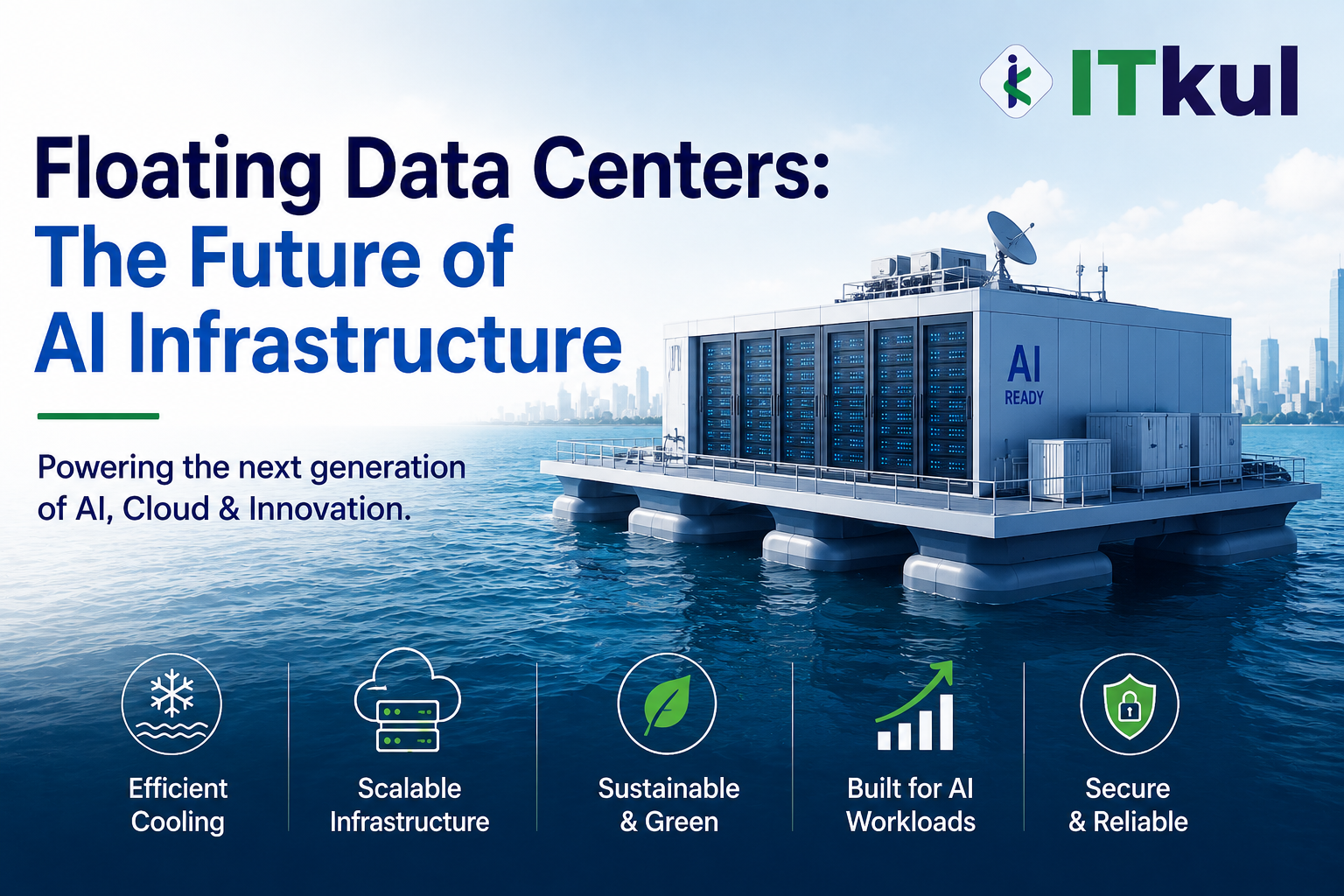
One emerging concept is the floating data center—a server facility built on specially designed offshore platforms or barges. Samsung Heavy Industries has announced plans to commercialize floating data centers by 2028, aiming to reduce land constraints while leveraging seawater for cooling.
Although still in development, this technology reflects how cloud infrastructure is evolving and why IT professionals need to stay updated with emerging trends.
Why Are Floating Data Centers Being Developed?
Modern AI workloads require enormous amounts of computing power. Traditional data centers often face several challenges:
- Limited land availability
- High construction costs
- Increasing power consumption
- Expensive cooling systems
- Long deployment timelines
Floating data centers aim to solve some of these issues by placing computing infrastructure near coastal power sources while using seawater for efficient cooling.
Benefits of Floating Data Centers
Potential advantages include:
- Natural seawater cooling
- Lower land acquisition costs
- Faster deployment
- Scalable infrastructure
- Support for growing AI workloads
- Improved energy efficiency
As Artificial Intelligence continues to expand, innovative infrastructure like floating data centers could become part of future cloud ecosystems.
Engineering Challenges
Despite the advantages, floating data centers also introduce new engineering challenges.
- Saltwater corrosion protection
- Extreme weather resistance
- Reliable high-speed connectivity
- Physical security
- Power redundancy
- Maintenance in marine environments
Developing these facilities requires expertise from both marine engineering and modern IT infrastructure teams.
What This Means for IT Professionals
Regardless of where data centers are located, organizations still need professionals capable of designing, deploying, securing, and managing enterprise infrastructure.
Highly demanded skills include:
- Cloud Computing (AWS, Azure, GCP)
- Linux Administration
- Networking
- Virtualization
- Docker
- Kubernetes
- DevOps
- Infrastructure Automation
- Cyber Security
Professionals with multiple infrastructure skills continue to enjoy excellent career opportunities.
Career Opportunities
Growing cloud infrastructure creates demand for professionals such as:
- Cloud Engineer
- Infrastructure Engineer
- System Administrator
- DevOps Engineer
- Site Reliability Engineer (SRE)
- Network Engineer
- Cyber Security Analyst
- Data Center Operations Engineer
These careers are expected to remain among the fastest-growing IT roles over the coming years.
Skills Students Should Learn
Students preparing for modern IT careers should build expertise in:
- Linux Administration
- Networking Fundamentals
- Python Programming
- Cloud Computing
- Docker & Kubernetes
- Git & GitHub
- DevOps
- Cyber Security
- Infrastructure Automation
Hands-on cloud projects and practical labs significantly improve employability.
Why Cloud Computing Continues to Grow
The rapid growth of Artificial Intelligence is accelerating investment in cloud infrastructure worldwide.
Organizations need scalable, secure, and energy-efficient computing platforms capable of supporting AI models, enterprise applications, and massive data processing workloads.
Innovations like floating data centers demonstrate that the future of cloud computing will depend on both software expertise and advanced infrastructure engineering.
Final Thoughts
Floating data centers represent another milestone in the evolution of cloud computing. While the technology is still emerging, it highlights the increasing demand for professionals skilled in Cloud Computing, DevOps, Linux Administration, Networking, Infrastructure Automation, and Cyber Security.
At ITKul, our industry-focused training programs help students develop practical, job-ready skills in Cloud Computing, DevOps, Linux Administration, Networking, Python Programming, Artificial Intelligence, and Cyber Security to prepare for the next generation of IT careers.
Frequently Asked Questions
Q1. What is a floating data center?
A floating data center is a server facility built on offshore platforms or barges that uses seawater for cooling while hosting enterprise computing infrastructure.
Q2. Why are floating data centers important?
They help address land shortages, improve cooling efficiency, and support growing AI infrastructure requirements.
Q3. Which IT skills are valuable for cloud infrastructure careers?
Cloud Computing, Linux, Networking, DevOps, Docker, Kubernetes, Python, Infrastructure Automation, and Cyber Security are among the most valuable skills.
Q4. Will floating data centers replace traditional data centers?
No. They are expected to complement conventional facilities where offshore deployment provides operational and environmental advantages.
Q5. Is Cloud Computing still a good career in 2026?
Yes. AI adoption, enterprise cloud migration, and next-generation infrastructure projects continue to create strong demand for cloud professionals worldwide.

ITKul Team
ITKul Team is delivering expert articles, technology insights, and career resources focused on AI, Data Science, Software Development, Cloud, Cyber Security, emerging IT trends and Tech news to help learners become industry-ready professionals.

Leave a Comment